Building An Author Ecosystem: Beyond the Algorithm
If you have been feeling like the old launch playbook is losing its magic, you are not imagining things. The days of exhausting yourself with a high-pressure, one-week launch blitz — only to watch your book vanish into the algorithmic void — are over.
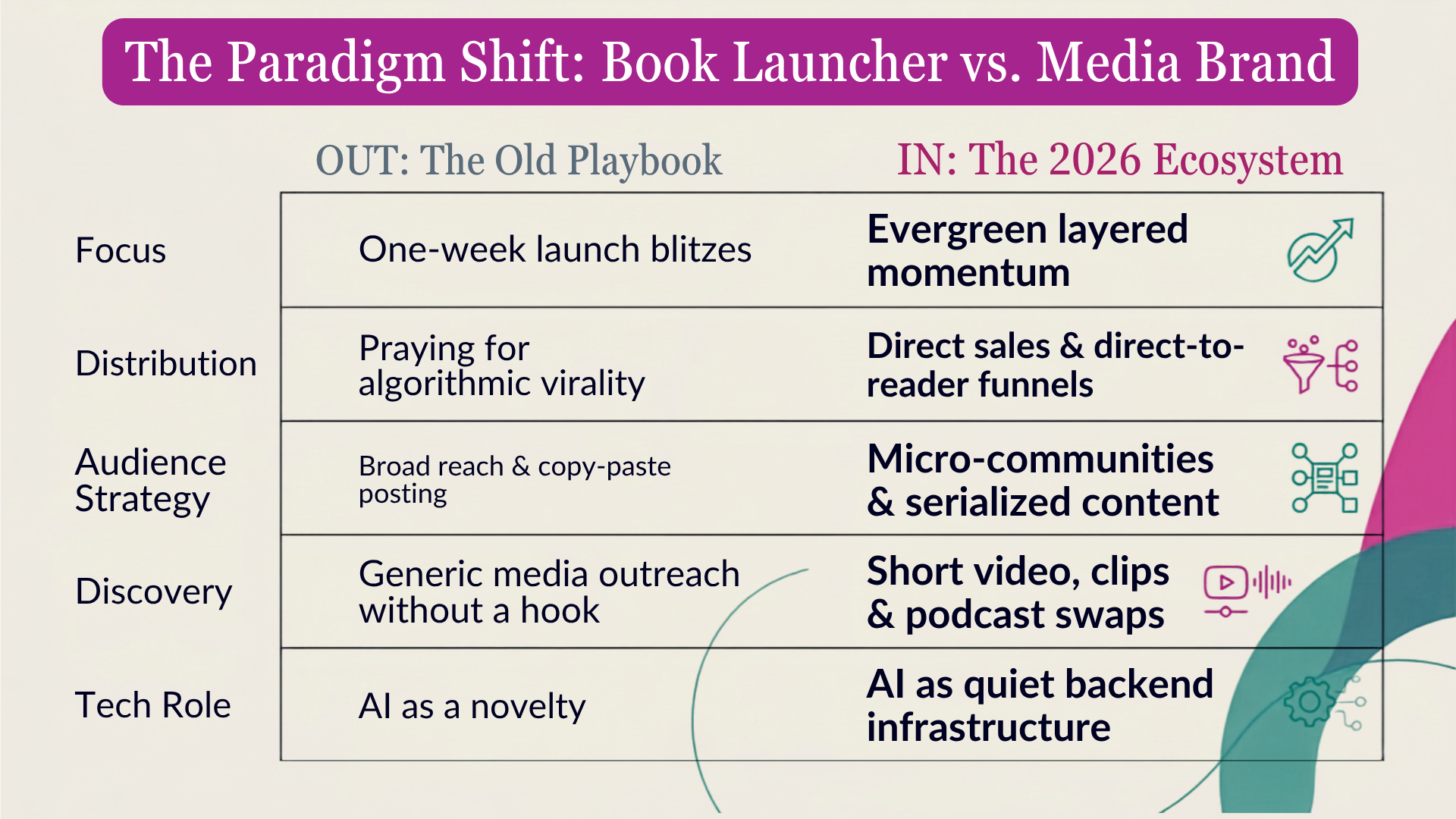
Chasing platform trends is a race to the bottom. As we navigate 2026, the industry has reached a tipping point: sustainable success no longer belongs to the book launcher, but to the author who architects a media brand. To thrive today, you must transition from a creator of single products to the curator of a self-sustaining author ecosystem.
1. Direct-to-Reader: The New Revenue Standard
In 2026, direct sales have moved from a "nice-to-have" experiment to the primary revenue engine for top-tier indie authors. The most profitable authors are prioritizing author-controlled storefronts — using tools like BookFunnel and direct checkout integrations — over total reliance on third-party retailers.
This is not just about higher margins. It is about owning your reader data and controlling the pricing narrative. The real money in 2026 is found in the extra bundle: offering value that a standard eBook file simply cannot match.
Bundle ideas to elevate your author ecosystem:
Special Editions: Digital or physical copies with exclusive covers or signed elements.
Workbooks & Companions: Interactive PDFs or physical journals that deepen the reader's experience.
Exclusive Audio: Author commentaries, director's cut chapters, or unique audiobook content.
Community Access: Direct entry into your inner-circle reader spaces or content vaults.
2. Your Newsletter Is the New Homepage
"Newsletters are becoming the new author homepages."
The static author website of the past has officially been replaced by dynamic, consistent publishing on platforms like Substack, Patreon, and LinkedIn. This shift represents a move toward serialized storytelling and behind-the-scenes access.
By offering paid tiers and a consistent publishing cadence, you transform a one-time reader into a long-term subscriber. This model creates a resilient platform that you own — protecting your career from the volatility of social media reach and algorithm changes.
3. Deep Engagement: Micro-Communities Over Broad Reach
The 2026 landscape rewards depth over breadth. The pursuit of generic virality is a distraction. Instead, the most successful author brands are focusing on home bases where engagement is intimate and personal.
Whether it is a dedicated Skool group, a Discord channel, or a niche Facebook group, micro-communities are the engines of true reader loyalty. Moving away from copy-paste posting and toward genuine interaction ensures your core audience feels seen and heard — creating a foundation for a career that lasts decades rather than one launch cycle.
4. AI as Your Invisible Co-Pilot (Not Your Ghostwriter)
"AI is going to become your marketing co-pilot."
In 2026, AI has moved from a novelty to essential marketing infrastructure. While we never use AI to write the soul of a book, it is your most powerful ally in managing the cadence of your brand.
Savvy strategists use tools like Perplexity, Claude, and Google NotebookLM for research, A/B testing subject lines, and optimizing ad spend. However, your human voice remains your primary differentiator — readers can spot AI-speak from a mile away, often signaled by generic sentence structures or overused phrasing.
How to Use AI Effectively in Your Author Marketing
Research trends, comp titles, and reader sentiment in your genre
A/B test email subject lines and ad copy variations
Repurpose long-form content into social posts, email snippets, and clips
Optimize your ad spend with data-backed recommendations
Train your AI tools on your specific tone and voice so output sounds like you, not a bot
5. Video-First Discovery and the Evergreen Content Machine
Video content is the primary engine for reader discovery in 2026. Video podcasts and short-form clips function as evergreen discovery machines — allowing readers to connect with your personality before they ever buy a book.
Using tools like Riverside or Opus, you can record one interview or casual conversation and turn it into a high-impact repurposing loop.
The 2026 Content Repurposing Formula
1 core piece of content = 2 longer videos + 3 social posts + 4 Emails + 5 clips
The Introvert's Video Strategy
You do not need to perform for a camera. Instead, set up a relaxed video chat with a trusted friend who asks you questions about your book, your world, and your writing process. This creates natural, engaging content that feeds the repurposing formula above — no ring light required.
6. The Rise of the Hybrid Launch
The 2026 way of launching is a marathon, not a sprint. It involves layering multiple forms of momentum — online events, podcast guesting, and targeted in-person bookstore appearances — to create a hybrid effect that builds over time rather than burning out in a single week.
7. The 2026 Author Funnel: A Simple Three-Tier Framework
To manage your brand without losing your mind, apply this three-tier funnel to everything you create and publish.
Top — Discovery: Short-form video clips or podcast appearances that lead to a high-value lead magnet.
Middle — Relationship: A personal, consistent newsletter that nurtures trust and delivers what readers can only get from you.
Bottom — Conversion: Direct offers including book bundles, memberships, and backlist stacks to maximize lifetime reader value.
Conclusion: Build Assets, Not Just Attention
The 2026 market rewards authors who build long-term assets — their mailing lists, their communities, and their direct-sale platforms — rather than those who only hunt for fleeting attention.
By shifting your mindset from launching a product to building an ecosystem, you create a brand that survives every algorithm change, every platform shift, and every industry disruption.
Strategy Tip: What is the first step you will take today to begin building your own author ecosystem? Do that this week.
Watch the Authors’ Allies podcast, episode 45 for more information.
Frequently Asked Questions About the Author Ecosystem in 2026
Q: What exactly is an "author ecosystem" and why does it matter in 2026?
An author ecosystem is a marketing approach that moves away from chasing social media algorithms and one-time launches. Instead, it focuses on building direct-to-reader channels such as newsletters and direct sales platforms, using AI tools for backend marketing tasks, and creating short-form video for ongoing audience discovery. It matters because the authors who build ecosystems create sustainable careers — those who chase algorithms burn out.
Q: Should I use AI to write my books or marketing content?
AI should be your marketing co-pilot, not your ghostwriter. It is highly effective for tasks like A/B testing subject lines, ad optimization, repurposing a blog post into social media clips, and researching your market. Your unique human voice, however, is what keeps readers coming back. Readers can detect AI-generated content — train your tools on your specific tone so everything still sounds like you.
Q: I am an introvert and uncomfortable on camera. Do I really need to use video?
Video is strongly recommended in 2026 because it functions as an evergreen discovery machine — readers connect with your personality before they ever buy. But you do not need to be a flashy influencer. The introvert strategy is simple: record a relaxed video chat with a friend who asks you questions about your book and process. Use AI tools like Opus to pull short, natural clips. No performance required.
Q: What marketing tactics should I leave behind in 2026?
Step away from one-week launch blitzes with no long-term follow-through, copying and pasting identical posts across all social platforms, relying on generic media pitches with no compelling hook, and simply hoping a post goes viral. These tactics have diminishing returns and do not build the long-term assets your author career needs.
Q: How do I start building a direct-to-reader revenue stream if I have never sold directly before?
Start small and test one offer. Choose a bundle that adds genuine value beyond the standard eBook — a signed copy, a companion workbook, or exclusive audio commentary are great starting points. Use a tool like BookFunnel or Payhip to set up a simple storefront. Promote it first to your existing email list. Direct sales success is built through iteration, not perfection, so start with one offer and refine from there.
If you enjoy a podcast script, here's the text for the above episode.